





















 Loading...

In the vibrant, kaleidoscopic universe of online arcade gaming, where countless titles compete for attention with ever-increasing complexity, a particular breed of game finds its magic in the elegant interplay of color and reflex. These are the color-matching games, digital descendants of the sorting and pattern-recognition puzzles that have captivated human minds for centuries. Among the most addictive and visually stunning entries in this colorful category is Ball Color, a game hosted on the GamePix platform that fuses the thrill of a vertical bouncing platformer with the cognitive challenge of real-time color matching, creating an experience that is as mentally engaging as it is reflexively demanding.
The premise of Ball Color is a stroke of arcade genius. You control a bouncing ball that ascends through a vertical gauntlet of platforms, much like a classic endless jumper. But there is a brilliant, brain-teasing twist: your ball changes color, and the platforms you must land on are painted in a variety of hues. The golden rule is simple and unforgiving: your ball can only safely land on a platform that matches its current color. Land on a mismatched platform, and the game is over. This single rule transforms the familiar bounce-and-climb mechanic into a dynamic, high-speed cognitive puzzle. You are not just navigating space; you are constantly processing color information, planning your route based on your ball's current hue, and making split-second decisions that test both your reflexes and your brain's ability to categorize and react.
This comprehensive guide is your training manual for the colorful, chaotic world of Ball Color. Whether you are a newcomer watching your ball shatter on the very first mismatched platform, a casual player struggling to keep up as the colors and speed intensify, or a high-score chaser aiming to master the art of the perfect, color-coordinated ascent, this article will provide the strategies, cognitive techniques, and mental frameworks you need. We will deconstruct the game's unique color-matching mechanic, reveal the secrets of route planning and visual scanning, teach you how to manage the escalating cognitive load, and cultivate the calm, focused, dual-processing mindset required to conquer the rainbow. Prepare to sharpen your eyes, engage your brain's color centers, and sync your reflexes with the rhythm of the spectrum. The platforms are painted, your ball is glowing, and the sky is a vibrant, challenging rainbow.
Entering the Spectrum: What is Ball Color?
Before we start bouncing, matching, and climbing towards chromatic glory, it's essential to understand the ingenious design and irresistible appeal of Ball Color. This is a browser-based arcade puzzle-platformer that brilliantly merges the endless vertical bouncer genre with a real-time color-matching mechanic. The core loop is a constant, engaging dialogue between your spatial reflexes and your cognitive processing speed.
The Beauty of the Rainbow
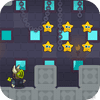
The visual design of Ball Color is a feast of vibrant, saturated hues. The game world is an abstract, vertical playground bathed in bold, contrasting colors. The platforms are rendered in crisp, easily distinguishable shades—cherry red, ocean blue, sunny yellow, grass green, royal purple, and more. The background is likely a dynamic, shifting gradient or a sleek, dark void that makes the platform colors pop with intense clarity. Your ball is the luminous center of attention, a glowing sphere that cycles through colors with a smooth, visually satisfying transition. The entire aesthetic is designed for instant readability. In a game where a split-second color misjudgment means death, the visual clarity of the colors is paramount. The game likely uses distinct, non-muddied hues that are easily differentiated even in peripheral vision and at high speeds. The sound design complements this with crisp, distinct audio cues—a bright "ding" for a successful color match, a harsh "shatter" for a mismatch, and perhaps a subtle, rising tone as your ball's color is about to change.
The Fusion of Two Challenges
The genius of Ball Color lies in its fusion of two distinct cognitive domains. The vertical platforming tests your visuospatial processing and reflexes—can you navigate the ball to the correct platform in time? The color matching tests your cognitive processing speed and selective attention—can you quickly identify which platforms are safe and which are deadly? This dual task creates a cognitive load that is far more demanding and engaging than either challenge alone. It is a game that forces you to multitask, to split your attention between the spatial problem of "where is the next platform?" and the categorical problem of "what color is my ball, and which platforms match it?" This fusion is what makes the game so uniquely addictive.
The Chromatic Mechanic: Understanding the Core Rules
To master Ball Color, you must first internalize the fundamental rules that govern the game's colorful universe. This is not just a bouncing game; it is a real-time sorting algorithm.
The Matching Rule: The One Law
The rule is absolute: your ball's color must match the platform's color upon landing. If the colors match, the ball bounces safely, and you continue your ascent. If the colors do not match, the ball is destroyed, and the game ends. There are no exceptions, no near-misses, no grace periods. This binary, unforgiving rule is the engine of the game's tension. It forces you to treat every platform as a decision, a quick computation of "safe" or "deadly."
The Ball's Changing Color
Your ball does not stay a single, constant color. It changes. The color shifts might occur after a certain number of bounces, after a set time interval, or upon collecting a specific power-up. The game will likely provide a visual and auditory cue that a color change is imminent—the ball might flash, pulse, or emit a warning tone. This anticipatory cue is your most critical piece of information. The moment you see or hear the warning, your entire strategy must shift. You are no longer aiming for platforms that match your current color; you are aiming for platforms that match your next color, which you must identify and target before the change even occurs.
The Platform Layout as a Color Matrix
The arrangement of colored platforms is not random; it is the level's primary puzzle. Some screens will present a generous scattering of platforms in your ball's current color, making survival easy. Other screens will present a gauntlet where the safe platforms are few, far between, and positioned in awkward, risky locations. The game challenges you to read the color matrix at a glance. In a fraction of a second, you must scan the upcoming screen, identify every platform that matches your ball's color, filter out the mismatched ones, and plot a safe route through the chaos. This rapid visual search is the core cognitive skill the game trains.
The Strategy of the Chromatic Ascent: Route Planning and Execution
Beyond the basic rule, a strategic approach to route planning and color management is what separates a casual bouncer from a true color master.
The "Safe Lane" Identification
As you ascend, your primary visual task is to identify the "safe lane"—the vertical or diagonal corridor through the screen that contains a sequence of platforms matching your ball's current color. Do not focus on individual platforms in isolation. Instead, try to perceive the overall flow of matching colors. Is there a chain of red platforms forming a path up the left side of the screen? Is there a gap in the blue lane that will require a risky jump to a single, isolated blue platform? By thinking in terms of lanes and routes rather than individual platforms, you can plan your movements several bounces ahead, transforming a frantic scramble into a smooth, planned ascent.
The Anticipatory Color Switch
The mark of an expert player is their ability to handle the color change proactively, not reactively. When the game signals an imminent color change, do not wait for the change to happen and then frantically search for a new safe platform. Instead, in the moments before the change, visually scan the screen for platforms matching the next color. Identify your new safe lane. If possible, begin subtly steering your ball towards that lane even before the color flips. When the change occurs, you are already positioned, already moving towards your new safe zone. This anticipatory technique eliminates the moment of vulnerable, post-change panic and turns a dangerous transition into a smooth, controlled maneuver.
The Peril of the Wrong Color
Mismatched platforms are not just neutral; they are active threats. Treat them as obstacles, as holes in the level. A common mistake is to fixate on a platform's convenient location while ignoring its deadly color. You see a perfectly positioned platform right in your natural ascent path. Your reflexes want to land on it. But it is the wrong color. You must override this spatial instinct with the cognitive rule. The mismatched platform is a trap. You must deliberately steer away from it, even if it means taking a more difficult, less direct route to a matching platform that is further away. This discipline of ignoring the spatially obvious but chromatically deadly is a core skill.
The Power-Up Palette
The game may introduce special, non-standard platforms or collectible power-ups that alter the color rules. A rainbow or white platform might be a "wild card" that can be landed on safely regardless of your ball's color. A color-switch orb might allow you to manually change your ball's color. A monochrome mode might temporarily turn all platforms grey, removing the color challenge entirely for a brief period. When these special elements appear, your strategy should instantly pivot to exploit them. A wild card platform is a sanctuary. A manual color switch is a get-out-of-jail-free card. Learn to prioritize these game-changing elements.
The Cognitive Gauntlet: Training Your Brain for Dual Processing
Ball Color is a profound cognitive workout disguised as a casual arcade game. It demands a specific type of brain training that has real-world benefits.
The Dual-Task Challenge
The game forces you to perform two distinct mental tasks simultaneously: spatial navigation (a right-brain, visual-motor skill) and color categorization (a left-brain, cognitive-linguistic skill). This dual-task paradigm is a well-known method for increasing cognitive load and training divided attention. Your brain must learn to process spatial and categorical information in parallel, without one system bottlenecking the other. This is a skill directly transferable to driving, where you must navigate space while simultaneously processing the color and meaning of traffic lights and signs.
The Stroop Effect in Action
The game is a dynamic, real-time demonstration of the famous Stroop Effect, a psychological phenomenon where the brain experiences interference when the meaning of a word conflicts with its color. In Ball Color, you might experience a similar interference. You see a green platform, and your brain automatically recognizes it as a safe landing spot because it is a platform. But the rule says it is only safe if your ball is green. If your ball is red, you must inhibit your natural response to land on the platform and instead categorize it as a threat. This constant act of cognitive inhibition—of overriding an automatic response with a rule-based decision—is intense mental exercise.
Expanding Peripheral Color Awareness
To succeed at high speeds, you cannot rely on central vision alone. Your foveal vision—the sharp, central part—should be focused on your ball and its immediate trajectory. But your peripheral vision must be trained to scan the broader screen for color information. You can learn to identify the general color layout of the upper screen—"a cluster of red on the left, a blue path on the right"—without looking directly at it. This peripheral color awareness is a trainable skill, and Ball Color is its perfect gym.
The Inner Color: The Psychology of the Chromatic Gamer
The ultimate challenge of Ball Color is not the speed or the color patterns; it is the player's own mental state under pressure.
The Calm of the Spectrum
The game's vibrant, colorful world is inherently joyful and stimulating. Use this to your advantage. Do not approach the game with a grim, tense mindset. Approach it with a sense of playful, colorful flow. Let the bright hues and the rhythmic bouncing create a state of energized calm. A tense brain is a slow, rigid brain. A relaxed brain is fast, flexible, and able to process the rapid color changes with fluidity. The game's aesthetic is an invitation to a joyful cognitive dance, not a stressful test.
The Color Confusion Tilt
A specific type of frustration can occur when the color changes happen rapidly and you begin to misidentify colors under pressure. You might swear you were aiming for a blue platform, only to watch your red ball shatter on it. This can lead to "color confusion tilt," a state where you start second-guessing your own perception. The cure is the deliberate reset. If you feel the colors starting to blur and confusion setting in, take a break. Look away from the screen. Look at a neutral, real-world object for a few seconds to reset your color perception. A fresh, rested visual system is far more reliable than a fatigued, tilted one.
The Single-Bounce Focus
When the game reaches extreme speeds and the color changes are coming fast, it is easy to become overwhelmed. The cognitive load feels impossible. The solution is the "single-bounce focus." Shrink your world to just the next bounce. Do not worry about the sequence of five platforms ahead. Just find the one, single platform on the screen that matches your current color and is reachable. Bounce on it. Then, find the next one. This mental chunking breaks down an overwhelming, rapid sequence into a series of manageable, single-step decisions. Focus on the present bounce. The next one does not exist yet.
Conclusion: The Perfect Match
As the ball completes its final, perfectly matched bounce of a record-breaking run, and the screen celebrates your chromatic mastery, we reach the end of our guide to Ball Color. The game, in its brilliant fusion of color and motion, has challenged a unique combination of your cognitive and reflexive abilities, and you have risen to meet that challenge.
We have deconstructed the game's fundamental matching rule, the critical importance of anticipating color changes, and the strategy of identifying safe color lanes through the chaos. We have explored the profound cognitive training the game provides, from dual-task processing and Stroop-effect inhibition to the development of peripheral color awareness. And we have cultivated the inner mental game, the calm, joyful, single-bounce focus that allows a player to remain fluid and accurate even as the colors and speeds reach their dizzying peak.
The Ball Color game on GamePix is a shining example of how a single, clever twist on a classic formula can create an experience that is fresh, challenging, and deeply rewarding. So, step back into the spectrum. Your ball is glowing, its color pulsing with potential. The platforms are painted, waiting for the perfect match. Your highest score is just one correct color away. Happy bouncing, and may your colors always align.
Embed this game